Chronic disease is the defining challenge of modern healthcare. In the United States, conditions like diabetes, hypertension, and heart disease affect nearly half of adults. They account for 90% of annual healthcare spending and are a leading cause of disability and death.
The traditional model of care occasional check-ups, reactive interventions, and hospitalizations simply isn’t enough anymore. Chronic conditions demand something different: continuous care.
That’s where Remote Patient Monitoring (RPM) 2.0 comes in, powered by the fusion of artificial intelligence (AI) and the Internet of Things (IoT).
The First Wave of RPM: Useful, But Limited
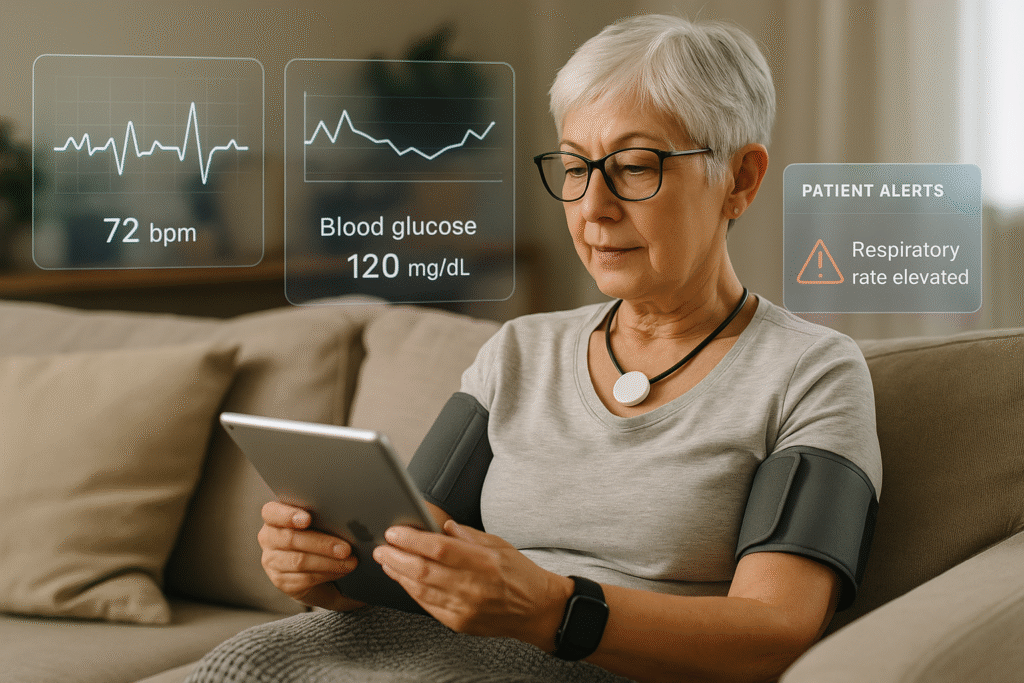
Wearables, glucose monitors, and connected blood pressure cuffs were the first step toward at-home monitoring. Patients could collect their health data and send it to providers, giving clinicians a window into daily life between visits.
But there were problems:
- Too much data: Providers couldn’t sift through hundreds of readings per patient.
- False alarms: Alerts were frequent, often unnecessary, and led to fatigue.
- Fragmentation: Devices weren’t interoperable, and data often lived in silos.
Patients felt empowered, but providers were overwhelmed. The promise of RPM was real, but the execution needed evolution.
RPM 2.0: From Monitoring to Prediction
Now, with AI analyzing IoT device data in real time, RPM is entering a new era. Instead of overwhelming clinicians with raw information, AI transforms data into actionable intelligence.
- For a cardiac patient, AI can detect subtle heart rate variability that signals trouble before it becomes an emergency.
- For a diabetic patient, predictive algorithms can forecast glucose spikes and recommend proactive adjustments.
- For a post-surgery patient, AI can track recovery progress and alert providers to signs of infection or complications.
This isn’t just data it’s foresight. RPM 2.0 means doctors no longer have to wait for patients to deteriorate before acting.
Elder Care: Protecting Independence with AI + IoT
The aging population poses one of the greatest challenges for U.S. healthcare. Millions of seniors want to live independently, but they face risks like falls, cognitive decline, and chronic illness.
AI-enhanced IoT is now making it possible to provide round-the-clock safety without round-the-clock supervision.
- Smart sensors can detect irregular movement or prolonged inactivity.
- Voice and vision tools can identify changes in speech, behavior, or motor skills.
- Predictive alerts notify caregivers before a fall or health crisis occurs.
This not only keeps seniors safer it also relieves the emotional and financial burden on families and healthcare providers. Elder care is evolving from emergency response to proactive protection.
The Bigger Picture: Why RPM 2.0 Matters for U.S. Healthcare
The stakes are massive. Chronic disease drives skyrocketing costs and strains every level of the healthcare system. Hospital readmissions alone cost billions annually.
By integrating AI and IoT into chronic care, RPM 2.0 can:
- Cut hospital readmissions by identifying early warning signs.
- Expand access to rural or underserved regions where clinicians are scarce.
- Boost efficiency by reducing unnecessary ER visits and urgent interventions.
- Improve outcomes by enabling care that is proactive, personalized, and patient-centered.
This shift aligns perfectly with U.S. healthcare priorities: lower costs, higher equity, stronger resilience, and better outcomes for all patients.
SynaptiCare’s Vision for Continuous, Predictive Care
At SynaptiCare, we believe RPM 2.0 is not just about devices it’s about intelligence. Our platform brings together wearable, IoT, and EHR data into a single, secure system that works for both patients and providers.
- Continuous Monitoring: Patients are always connected, whether managing diabetes, recovering from surgery, or living with heart disease.
- Real-Time Alerts: AI filters out noise and surfaces only the most important warnings, ensuring clinicians respond to what truly matters.
- Personalized Insights: No two patients are alike. Our models adapt to individual baselines, creating care plans as unique as each patient.
- Caregiver Support: Families and caregivers receive timely alerts, reducing stress and improving quality of life for everyone involved.
We’re not building technology for technology’s sake. We’re building systems that make care smarter, faster, and more compassionate.
A Glimpse Into the Future
Imagine this:
- A diabetic patient’s wearable detects a trend toward dangerous glucose levels. Before symptoms appear, their AI-powered system recommends adjustments and their provider receives an alert. Crisis averted.
- An elderly woman begins to show subtle changes in her walking pattern. AI recognizes the risk of a fall and notifies her caregiver, who arranges a preventive check-up. Independence preserved.
- A heart patient at home has a silent arrhythmia detected overnight by an AI + IoT monitor. The provider is alerted immediately, preventing a trip to the ER. Life saved.
This isn’t hypothetical. This is the future we are building now.
Closing Thoughts
The future of healthcare isn’t about waiting for emergencies it’s about preventing them. Remote Patient Monitoring 2.0 transforms chronic care from reactive to proactive, from fragmented to unified, and from overwhelming to empowering.
For patients, it means fewer crises and more confidence.
For providers, it means actionable insights instead of endless data streams.
For the healthcare system, it means lower costs and stronger resilience.
At SynaptiCare, we are leading this transition with platforms that combine AI, IoT, and human-centered design to deliver truly predictive care.
Because in the battle against chronic disease, every second counts — and every insight matters.